

Development projects are never gender neutral as every
development intervention affects women, men, girls, and boys differently, even
when the project does not explicitly target gender issues (Moser, 1993; Kabeer,
1994). A road, a water point, a resettlement package or a cash-for-work scheme
are implemented in communities where women and men, girls and boys, already
hold different rights, workloads, risks and voices from different socioeconomic
backgrounds. A plan that ignores those differences does not treat everyone
equally; it quietly reproduces existing inequality and often deepens it in a
new style.
Imagine a scenario. A tube-well is established beside the
market road because that is where the male committee members met the project
experts during the planning consultation. The women and girls who actually
collect water now walk past a market where unfamiliar people gather, or a
construction camp where labors from other areas live temporarily. On paper, the
project delivered “safe water access”. In lived experience, it added a
‘uncomfortable’ walk and a new fear. Nobody intended harm; the plan simply never
asked who does what, where, and at what cost. Gender-responsive planning ask
those questions before project funds are spent and the construction starts.
What is gender-responsive project planning, and why does
it matter?
The idea behind gender-responsive planning was set out by the UN Economic and Social Council in 1997, when it defined gender mainstreaming as assessing the implications for women and men of any planned action (ECOSOC, 1997). In project terms, this means finding out how women and men, girls and boys actually use resources, divide work and make decisions in a particular place. Activities, budgets, staffing and indicators are then shaped to fill up the gaps that this analysis reveals. Gender responsive planning believed that counting women among beneficiaries is not enough to address women’s need.
Practitioners often describe projects along a continuum that includes gender-blind, gender-sensitive, gender-responsive, and gender-transformative projects (WHO, 2011; IGWG, n.d.). Gender-blind projects treat “the community” as if everyone in it had the same needs and the same power. Gender-sensitive projects recognize differences in needs, benefits and loses and try to avoid harm. Gender-transformative projects go further and seek to change the norms and power relations in the existing social order that produce inequality. Gender-responsive planning sits at the working center of this continuum. It plans, funds and monitors specific action on the gaps it identifies, and it opens the way to deeper change.
Why does this matter? The first reason lies inside the household. Development planning has long treated the household as a single unit, with pooled income and one decision-maker who is usually a man. Sen (1990) described it instead as a site of “cooperative conflict”, and Agarwal (1997) showed that a woman’s bargaining power depends on her assets, on social norms, and on support from the community and the state. When compensation, credit or training is delivered to “the household head”, it may never reach the woman whose homestead garden, poultry or petty trade was actually lost. Kabeer (1994) showed how such male-centered assumptions made women’s work invisible in development thinking.
The second reason is the nature of women’s rights. In the contexts like South Asian and East African societies, women’s access to land, water, grazing and trees often runs through kinship, marriage and customary practices rather than title deeds. Scholars argued that independent land rights are central to rural women’s economic security and voice (Agarwal 1994). Surveys and entitlement matrices built only on legal ownership make these customary claims invisible, and resettlement planning often skipped them ‘unintentionally’.
Third, ignoring gender reduces development potential. The
FAO (2023) finds that women farmers are 24 per cent less productive than men on
farms of equal size, largely because of unequal access to land, inputs, credit
and services. Women in agricultural wage work earn 82 cents for every dollar
men earn. Closing these gaps could add nearly US$1 trillion to global GDP and
reduce the number of food-insecure people by about 45 million. Services
designed for imagined users underperform, and livelihoods restored on paper are
not restored in practice.
Fourth, projects can create new ‘harm’. Major lenders like the World Bank (2020; 2017) recognizes that major civil works bring labor influx, new cash flows and changing power relations, which can increase the risk of sexual exploitation, abuse and harassment (SEA/SH) in host communities.
Fifth, climate change magnifies existing inequality. The IPCC’s Sixth Assessment Report finds that climate impacts fall unequally. Vulnerability is concentrated among people who face historical and structural disadvantage, including women (Aguilar et al., 2023). Women and girls often carry the heaviest adaptation burden, yet they are frequently absent from early-warning systems and from the design of shelters.
Finally, “women” is never one category. Crenshaw (1989) coined the term intersectionality to show how gender combines with other forms of disadvantage. A widowed tenant farmer, a woman with a disability, an adolescent domestic worker and a hijra person face different barriers in their social contexts. Gender-responsive planning must consider gender with special attention to differences in age, disability, class, caste, ethnicity and displacement, then it will benefit all adequately, not only the most visible women.
How it is dose
Gender-responsive planning runs through the whole project cycle. Different lenders’ or donors’ guidelines do it in different phases. In general, it begins at screening, when the project planning experts ask whether a project will affect land, livelihoods, labor, mobility or community power, and for whom. Rating the risk of sexual exploitation and harassment early shapes the budget and team (World Bank, 2020).
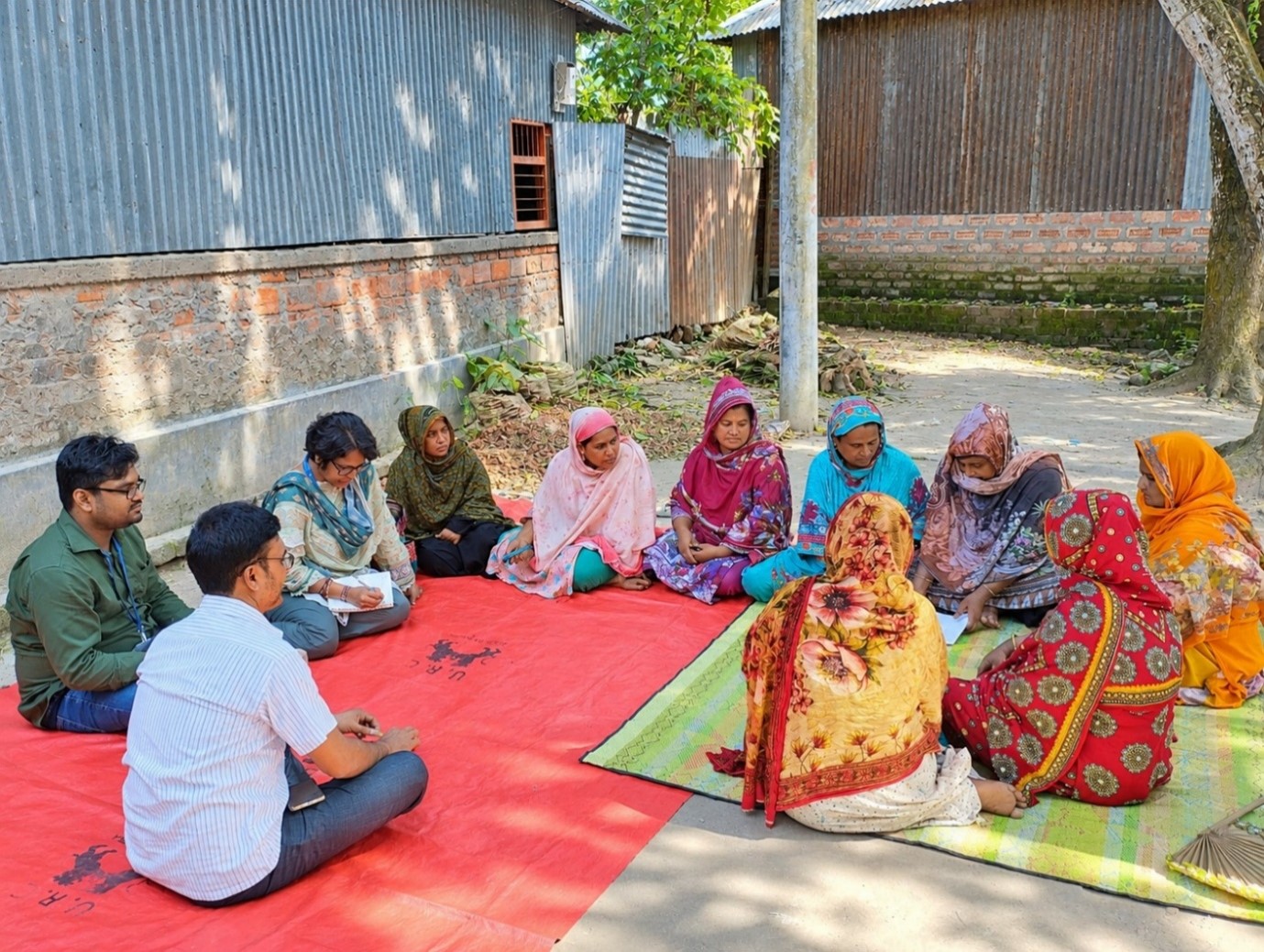
The heart of the work is understanding gender as it is lived. Sex- and age-disaggregated survey data are necessary, but numbers alone miss ‘underlying logic’ behind how norms operate. Women-only consultations, daily activity clocks, seasonal calendars, resource mapping and life histories reveal the social contexts that a structured questionnaire may skip (Chambers, 1994; March, Smyth and Mukhopadhyay, 1999). Listening for local categories is essential to understand the underlying local cultural relation. Women’s unpaid care work, for example, is often described, by women themselves, as “not work” (Benería, 1992).
Consultation must then be meaningful rather than the ‘requirement only’. An expert study local contexts and norms before beginning interaction with the people (e.g. purdah and respectability in Bangladesh, or gendered speaking roles in East African community meetings) (Kabeer, 2000). A meeting “open to all” can still be closed to most women. Agarwal (2001) calls this “participatory exclusion”, and Cornwall (2003) shows how participatory approaches can reproduce the very exclusions they set out to overcome. Separate sessions with female facilitators, held at times and places women can reach, change who is heard.
Most importantly, these insights should ultimately translate into design. It needs joint titling where possible and recognition of customary use in compensation, livelihood restoration, real decision-making in user committees, safe siting and lighting, and fair local hiring. They belong in a Gender Action Plan with indicators and a budget because a plan without money and responsibility is only a wish list.
However, accountability completes the cycle. A grievance
mechanism for women is also a path to keep the project accountable to prove it
how gender-responsive it is. It needs confidential entry points, including
trusted women intermediaries/representatives, and a referral pathway to
medical, psychosocial and legal support. No survivor should have to report
through a male village leader or the contractor’s own staff (World Bank, 2020;
IASC, 2019). Monitoring should ask not merely how many women attended, but what
changed for them and at what cost. Throughout, men and boys must be engaged.
Gender norms are relational and women’s new roles can provoke backlash if local
perception of ‘masculinities’ are not dealt contextually (Cornwall, 2000).
International requirements and safeguarding practices
For lender-financed projects, much of this is now a condition of financing. The World Bank’s Environmental and Social Framework covers gender through its standards on risk assessment, labour, community health and safety, land acquisition and involuntary resettlement, Indigenous Peoples and stakeholder engagement. The standards are supported by Good Practice Notes on gender and on sexual exploitation and harassment in major civil works. The IFC Performance Standards, the benchmark for private lenders under the Equator Principles, are aligned with the same. The Asian Development Bank’s new Environmental and Social Framework, approved in November 2024 and applying to projects with concept notes approved from January 2026, places stronger emphasis on preventing sexual exploitation, abuse and harassment. The Green Climate Fund requires a gender assessment and action plan for every proposal, while UN and IASC standards on protection from sexual exploitation and abuse set zero tolerance for misconduct by project and aid personnel. The CEDAW, SDG 5, ILO Convention 190 and national policies such as Bangladesh’s National Women Development Policy 2011 covers gender issues for different contexts.
References
ADB (2024). Environmental and Social Framework.
Manila: ADB. Link
Agarwal, B. (1994). A Field of One’s Own: Gender and Land
Rights in South Asia. Cambridge: Cambridge University Press.
Agarwal, B. (1997). “Bargaining” and gender relations:
Within and beyond the household. Feminist Economics, 3(1), 1–51. https://doi.org/10.1080/135457097338799
Agarwal, B. (2001). Participatory exclusions, community
forestry, and gender: An analysis for South Asia and a conceptual framework. World
Development, 29(10), 1623–1648.
Aguilar, L., Tan, R. C., & Ocampo, J. (2023). Gender
Considerations in the IPCC Sixth Assessment Report (AR6). Bonn: UNCCD. Link
Benería, L. (1992). Accounting for women’s work: The
progress of two decades. World Development, 20(11), 1547–1560.
Chambers, R. (1994). The origins and practice of
participatory rural appraisal. World Development, 22(7), 953–969.
Chant, S., & Sweetman, C. (2012). Fixing women or fixing
the world? ‘Smart economics’, efficiency approaches, and gender equality in
development. Gender & Development, 20(3), 517–529.
Cornwall, A. (2000). Missing men? Reflections on men,
masculinities and gender in GAD. IDS Bulletin, 31(2), 18–27.
Cornwall, A. (2003). Whose voices? Whose choices?
Reflections on gender and participatory development. World Development,
31(8), 1325–1342.
Crenshaw, K. (1989). Demarginalizing the intersection of
race and sex. University of Chicago Legal Forum, 1989(1), 139–167.
ECOSOC (1997). Agreed Conclusions 1997/2 on Gender
Mainstreaming. In Report of the Economic and Social Council for 1997
(A/52/3). New York: United Nations.
FAO (2023). The Status of Women in Agrifood Systems.
Rome: Food and Agriculture Organization. Link
GCF (2019). Updated Gender Policy and Gender Action Plan
2020–2023 (GCF/B.24/15). Songdo: Green Climate Fund. Link
IASC (2019). IASC Six Core Principles Relating to Sexual
Exploitation and Abuse. Geneva: Inter-Agency Standing Committee.
IFC (2012). Performance Standards on Environmental and
Social Sustainability. Washington, DC: International Finance Corporation.
IGWG (n.d.). The Gender Integration Continuum.
Interagency Gender Working Group. Link
ILO (2019). Violence and Harassment Convention, 2019 (No.
190). Geneva: International Labour Organization.
Kabeer, N. (1994). Reversed Realities: Gender Hierarchies
in Development Thought. London: Verso.
Kabeer, N. (2000). The Power to Choose: Bangladeshi Women
and Labour Market Decisions in London and Dhaka. London: Verso.
March, C., Smyth, I., & Mukhopadhyay, M. (1999). A
Guide to Gender-Analysis Frameworks. Oxford: Oxfam.
Molyneux, M. (1985). Mobilization without emancipation?
Women’s interests, the state, and revolution in Nicaragua. Feminist Studies,
11(2), 227–254.
Moser, C. O. N. (1989). Gender planning in the Third World:
Meeting practical and strategic gender needs. World Development, 17(11),
1799–1825.
Moser, C. O. N. (1993). Gender Planning and Development:
Theory, Practice and Training. London: Routledge.
MoWCA (2011). National Women Development Policy 2011.
Dhaka: Ministry of Women and Children Affairs, Government of Bangladesh.
Share this page via